


Bravery is an interesting word. It's one of those words that has many different subtle shades of definition; ranging from altruism to stupidity. The big question is, of course, was it brave or stupid of me to volunteer to do a presentation at the first supervision of term?
To put this more in context, I haven't actually done a scientific presentation since, well, at all. We did some mini ones in our supervision group last year, but they did not go so well. I haven't had to speak in front of a large crowd of people for about three years, not since the upper sixth performance of 'Dracula' where I stumbled on stage for a few minutes to play Translyvanian Peasant With Godawful Accent.
Here is the title and the link (for those who can get it) for what I have to present:
"Rb targets histone H3 methylation and HP1 to promoters"
I'm going to go through the paper now and try to provide a quick summary of what it is about. I have no idea how I'm meant to present it (hopefully there will be a brief meeting at some point to discuss this) but I can't help but feel things will go slightly better if I actually know what the paper is talking about.
okay... a look at the abstract and one brief scribbled diagram later this is what I've got:
Pretty pictures if you follow the links!
There is lots of DNA in the cell, so in order for it to fit into the nucleus it has to be coiled. One method for coiling involves wrapping the DNA around histone proteins (beads on a string) to keep them coiled. As well as keeping the DNA wound up, histones can also signal to transcription factors (proteins that start the complex process of turning DNA into protein) which bits of the DNA they need to read by displaying chemical signals.
One such signal is the methyl group, -CH3. Sticking a methyl group onto the end of a histone signals to the cells that this DNA is in Do Not Disturb mode, and should not be turned into protein. The study the paper was doing focused on a protein that goes around putting up all the nuclear Do Not Disturb signs; SUV39H1 (which shall henceforth be known as SUVy). This methylated the histones at a certain point (lysine 9 of histone H3 for anyone interested) and keeps the DNA associated with them from being expressed. It does this by recruting HP1 which binds to the DNA and, as far as I can work out from this, just sits there and stops it being expressed.
There are two forms that DNA in the nucleus can take: heterochromatin, which is all coiled up and not doing anything, and enchromatin, which is being actively expressed. This paper was getting fairly excited because while it was known that SUVy and HP1 were good at keeping heterochromatin quiet, they found them interacting with euchromatin! What's more they were consorting with Rb, a very well known protein that is involved in all sorts of processes that supress the expression of DNA, particularly in different parts of the cell cycle.
By doing various assays involving pulling out the Rb bound to DNA and then finding what bit of DNA it was bound to, they discovered that it methylated the same H3 on the lycine that HP1 did. Furthermore, Rb can interact with SUVy, due to a 'pocket domain' which SUVy fits into quite well. The end conclusion of all this is that Rb and SUVy interact together, methylate a part of the DNA which people hadn't really known SUVy was methylating, and then HP1 comes and sits on it.
The exciting thing here (alright not that exciting, but fairly interesting at the least) is that they put forward at the end that there may be other euchromatin repressor proteins out there that bind to SUVy and mobilise the DNA repression in euchromatin. Also, as Rb is involved in cell cycle control, it helps to build a bigger picture of just what is going on in the cell cycle (which cancer reseachers tend to like).
And woohoo I get to do a presentation on it. :)
Field of Science
-
-
Change of address1 year ago in Variety of Life
-
Change of address1 year ago in Catalogue of Organisms
-
-
Earth Day: Pogo and our responsibility1 year ago in Doc Madhattan


Proteomics

So, term has started. Lab Rat is out of the lab and back in the lecture theatre, which means probably less blog posts as I try to get through my rather scary reading list (thankfully it is made up mostly of papers but there's still rather a lot of it).
The first topic for this term is Proteomics; the study of the structure and function of proteins within a cell and living proof that adding the term -omics onto something gets you exciting amounts of funding. Proteomics is turning out to be fairly interesting, the paper I've just read, for example (here if you can get to it) talks about how large scale proteomics was used to compare the proteins in the malaria parasite P. falciparum in its different states of growth. The idea is to find a protein in one stage that isn't in the body naturally and then target it to kill off the parasite. Also it's really interesting finding out which proteins are expressed when, and which ones the parasite turns off at different stages for various reasons.
*sigh*
Yeah, I miss phages :(
The first topic for this term is Proteomics; the study of the structure and function of proteins within a cell and living proof that adding the term -omics onto something gets you exciting amounts of funding. Proteomics is turning out to be fairly interesting, the paper I've just read, for example (here if you can get to it) talks about how large scale proteomics was used to compare the proteins in the malaria parasite P. falciparum in its different states of growth. The idea is to find a protein in one stage that isn't in the body naturally and then target it to kill off the parasite. Also it's really interesting finding out which proteins are expressed when, and which ones the parasite turns off at different stages for various reasons.
*sigh*
Yeah, I miss phages :(
species specific mouse transcription and the start of term
Term is about to start! I still can't believe that the holiday is almost over :( On the other hand, this holiday does seem to have gone on a while, memories of exams and lectures and learning seem so far away.
I will have to step away from being a Lab Rat for a while, and go back to being a Student. Lectures, reading, more reading, desperately understanding and (a new one for this year) Seminars. Seminars are where some other lab rat stands at the front of the room and talks about their lab ratting for a bit and then everyone else has to try to think of clever things to say about it. It's all great fun and sometimes you get free wine or food.
So as it's the start of term and I'm full of Good Intentions I went over to my departmental webpage to see if any of the abstracts for the seminars were up. It turns out that the first one is up. Here it is:
"Homologous sets of transcription factors direct conserved tissue-specific gene expression, yet transcription factor binding events diverge rapidly between closely related species. We used hepatocytes from an aneuploid mouse strain carrying human chromosome 21 to determine on a chromosomal scale whether interspecies differences in transcriptional regulation are primarily directed by human genetic sequence or mouse nuclear environment. Virtually all transcription factor binding locations, landmarks of transcription initiation, and the resulting gene expression observed in human hepatocytes were recapitulated across the entire human chromosome 21 in the mouse hepatocyte nucleus. Thus, in homologous tissues, genetic sequence is largely responsible for directing transcriptional programs; interspecies differences in epigenetic machinery, cellular environment, and transcription factors themselves play secondary roles."
I actually almost fainted when I read that. A few deep breaths later and I decided to come back to it and understand it. (Why can't scientists write what they mean?)
Translation (if you want to skip my waffle and get straight to a quick translation skip to the italic bit)
I have to admit that I had a bit of a clue to help with the translation, they gave me the guys webpage. A quick look confirmed that he works for cancer research UK, which helps because there are actually a limited number of things people in cancer research tend to work with (well, at the very least it confirms that he's not working with bacteria...)
So...the first sentence. Transcription factors are proteins that bind to the DNA and control its expression. Probably a term most biochemists should really know (heh). Homologous just means 'pretty much the same'. So their problem is that they've got transcription factors in very similar species doing wildly different things.
Hepatocytes are liver cells. Aneuploidy means 'an abnormal number of chromosomes'. So they basically just stuck human chromosome 21 (the smallest one! and, incidentally, the one that leads to Down syndrome) into mouse liver cells to see what they did. The idea being to find out whether the differences were caused by the actual nuclear material or the 'epigenetic' surroundings (epigenetic = stuff that isn't DNA)
Epigenetics is a relatively new and exciting concept incidentally. It's the idea that the actual nuclear environment has a large part to play in what gets expressed rather than just the DNA as much. Also it's an idea that really pisses off James Watson and anything that pisses off James Watson is fine by me.
So what happened? Were the alien chromosome 21's expressed like mouse chromosomes (showing epigenetic control) or exactly as they would be in humans (showing DNA control). The answer is in the third sentence, the chromosome 21's were expressed exactly the same as they were in humans. No epigenetics here :(
*these aren't the epigenetic controls you're looking for*
For those who just want a simple translation here it is, to the best of my ability:
Similar sets of transcription factors are involved in controlling the expression of mouse DNA. However the way they work is very different, even in closely related species. We placed the human chromosome 21 into mouse liver cells to see if they were expressed like mouse chromosomes (showing control from factors other than the DNA) or like human chromosomes (showing that all control is from the DNA). The expression of the chromosome 21 in the mouse liver cell nucleus was almost identical to the way it is expressed in humans. Therefore, in similar tissues, it is the genetic sequence that determines how the DNA is expressed, all other factors are secondary.
Now I've got to try and think of clever questions to ask about that. I might have a try at getting hold of the paper, then at the very least I can ask poncy questions about the techniques.
I will have to step away from being a Lab Rat for a while, and go back to being a Student. Lectures, reading, more reading, desperately understanding and (a new one for this year) Seminars. Seminars are where some other lab rat stands at the front of the room and talks about their lab ratting for a bit and then everyone else has to try to think of clever things to say about it. It's all great fun and sometimes you get free wine or food.
So as it's the start of term and I'm full of Good Intentions I went over to my departmental webpage to see if any of the abstracts for the seminars were up. It turns out that the first one is up. Here it is:
"Homologous sets of transcription factors direct conserved tissue-specific gene expression, yet transcription factor binding events diverge rapidly between closely related species. We used hepatocytes from an aneuploid mouse strain carrying human chromosome 21 to determine on a chromosomal scale whether interspecies differences in transcriptional regulation are primarily directed by human genetic sequence or mouse nuclear environment. Virtually all transcription factor binding locations, landmarks of transcription initiation, and the resulting gene expression observed in human hepatocytes were recapitulated across the entire human chromosome 21 in the mouse hepatocyte nucleus. Thus, in homologous tissues, genetic sequence is largely responsible for directing transcriptional programs; interspecies differences in epigenetic machinery, cellular environment, and transcription factors themselves play secondary roles."
I actually almost fainted when I read that. A few deep breaths later and I decided to come back to it and understand it. (Why can't scientists write what they mean?)
Translation (if you want to skip my waffle and get straight to a quick translation skip to the italic bit)
I have to admit that I had a bit of a clue to help with the translation, they gave me the guys webpage. A quick look confirmed that he works for cancer research UK, which helps because there are actually a limited number of things people in cancer research tend to work with (well, at the very least it confirms that he's not working with bacteria...)
So...the first sentence. Transcription factors are proteins that bind to the DNA and control its expression. Probably a term most biochemists should really know (heh). Homologous just means 'pretty much the same'. So their problem is that they've got transcription factors in very similar species doing wildly different things.
Hepatocytes are liver cells. Aneuploidy means 'an abnormal number of chromosomes'. So they basically just stuck human chromosome 21 (the smallest one! and, incidentally, the one that leads to Down syndrome) into mouse liver cells to see what they did. The idea being to find out whether the differences were caused by the actual nuclear material or the 'epigenetic' surroundings (epigenetic = stuff that isn't DNA)

Epigenetics is a relatively new and exciting concept incidentally. It's the idea that the actual nuclear environment has a large part to play in what gets expressed rather than just the DNA as much. Also it's an idea that really pisses off James Watson and anything that pisses off James Watson is fine by me.
So what happened? Were the alien chromosome 21's expressed like mouse chromosomes (showing epigenetic control) or exactly as they would be in humans (showing DNA control). The answer is in the third sentence, the chromosome 21's were expressed exactly the same as they were in humans. No epigenetics here :(
*these aren't the epigenetic controls you're looking for*
For those who just want a simple translation here it is, to the best of my ability:
Similar sets of transcription factors are involved in controlling the expression of mouse DNA. However the way they work is very different, even in closely related species. We placed the human chromosome 21 into mouse liver cells to see if they were expressed like mouse chromosomes (showing control from factors other than the DNA) or like human chromosomes (showing that all control is from the DNA). The expression of the chromosome 21 in the mouse liver cell nucleus was almost identical to the way it is expressed in humans. Therefore, in similar tissues, it is the genetic sequence that determines how the DNA is expressed, all other factors are secondary.
Now I've got to try and think of clever questions to ask about that. I might have a try at getting hold of the paper, then at the very least I can ask poncy questions about the techniques.
Taxonomists vs. Phages
Taxonomy is one of those wonderful subjects that at first seems very simple (and very boring). The word comes from Greek - taxis meaning 'order' and nomos meaning 'law', or 'science' and is at it's most basic the science of classification. Most people do varying amounts of taxonomy at school; dividing living things into plants, animals and fungi, dividing the vertebrates into birds, mammals, amphibians, fish and reptiles etc.
Putting the dubious accuracy value of these classification labels aside (particularly the bit about reptiles) taxonomy is, at it's most basic level, a simple system for ordering things and putting them in little boxes. Glorified stamp collecting, as it were. But there are still plenty of arguments and various feuds about the exact relationships of things, most often at the species level, and even whether the whole 'five kingdom' model is any use (the five kingdoms are animals, plants, fungi, prokaryotes - roughly bacteria, and protoctista - which are basically the equivalent of the filing draw marked misc.). In fact, the more you delve into the science of taxonomy, the more complications and problems you start to encounter. Even something that would seem fairly simple, such as what defines a 'species' is a matter of hot debate.
And when you get down to the level of single-celled organisms the whole system goes a bit haywire. The distinction between 'animals', 'plants' and 'fungi' completely breaks down, there are single-celled things that are motile and animal-like but photosynthesise, things that only photosynthesise at the right time of day, or are perfectly sessile and plant-like except they don't photosynthesise. Most protozoa (single celled thingys, more information under the link) are now broken up into a whole new set of labels, very few of which seem to relate to the larger multi-cellular organisms.
When it gets to things like bacteria and bacteriophages, of course, taxonomists just break down and cry. Because bacteria, unlike most other things, don't even maintain their genetic integrity. Bacteria can share bits of their genome quite happily, even with bacteria that are seemingly very unrelated, making the whole 'species' concept break down a bit anyway. Phages merrily incorporate various bits of bacteria into themselves, splice bits out, even splice themselves in to bacterial genomes and sit there for a while. It's a complete headache to try and organise the things.
Various attempts have been made, of course, since the first discovery of phages in 1915 by the wonderfully python-esquely named Frederick Twort. (to give all and full credit they were also discovered completely independently in 1917 by Felix d'Herelle). The first system was based on morphology, what the phage looked like, and was greatly helped by the electron microscope. Although most phages adopt the 'lunar landing module' look, there is plenty of variation within that. Length of tail fibres, size of capsid, symmetry of the capsule, alright, not very much variation, but still something for taxonomists to hang onto.
Size and shape are never good indications of relatedness, a dolphin is more related to a hyena than to a shark, however similar the two might look. Nucleic acid research during the 1960's shook up the whole discipline of taxonomy by providing lots of new exciting DNA information. Phages could now be classified by the amount and type of DNA, which, added to the morphological data, provided a system (albeit a slightly wobbly one).
One of the most currently most widely popular methods to classify things is to examine the genetic DNA that codes for the ribosomes. Ribosomes are complexes of RNA and protein that are used to turn the genetic code into proteins. They are very highly conserved and are therefore very useful in determining evolutionary relatedness and taxonomy.
The problem is, of course, that bacteriophages don't have any ribosomes. They use the bacterial ones; they harness the bacterial internal machinery for replicating DNA and making proteins and therefore don't need to carry any of their own. In view of this, one of the most recent attempts to organise phage taxonomy has focused on looking at their proteins. The relatedness of the proteins has been used to create clever sounding things like distance matrices and the highly impressively named 'phage proteome tree'. Of course there are several problems, possibly the main one being that phages, especially the ones that sit inside bacteria, have a distressing tendency to pick up bits of DNA that aren't theirs. Which translates into proteins that aren't theirs and makes the whole procedure just that little bit more awkward.
There's been some work comparing the genomes of just the structural components, in the hope that there won't be too much genetic exchange going on with the genes that are actually needed to build the phage. The people doing it seem fairly confident, and have managed to isolate about five separate genera. There's a paper from them here, hopefully should be accessible (in form if not in content).
The whole thing is really all a bit up in the air, with some fairly amusing piss-ups between the different schools of thought. Horizontal gene transfer can be a bitch sometimes :)
Putting the dubious accuracy value of these classification labels aside (particularly the bit about reptiles) taxonomy is, at it's most basic level, a simple system for ordering things and putting them in little boxes. Glorified stamp collecting, as it were. But there are still plenty of arguments and various feuds about the exact relationships of things, most often at the species level, and even whether the whole 'five kingdom' model is any use (the five kingdoms are animals, plants, fungi, prokaryotes - roughly bacteria, and protoctista - which are basically the equivalent of the filing draw marked misc.). In fact, the more you delve into the science of taxonomy, the more complications and problems you start to encounter. Even something that would seem fairly simple, such as what defines a 'species' is a matter of hot debate.
And when you get down to the level of single-celled organisms the whole system goes a bit haywire. The distinction between 'animals', 'plants' and 'fungi' completely breaks down, there are single-celled things that are motile and animal-like but photosynthesise, things that only photosynthesise at the right time of day, or are perfectly sessile and plant-like except they don't photosynthesise. Most protozoa (single celled thingys, more information under the link) are now broken up into a whole new set of labels, very few of which seem to relate to the larger multi-cellular organisms.
When it gets to things like bacteria and bacteriophages, of course, taxonomists just break down and cry. Because bacteria, unlike most other things, don't even maintain their genetic integrity. Bacteria can share bits of their genome quite happily, even with bacteria that are seemingly very unrelated, making the whole 'species' concept break down a bit anyway. Phages merrily incorporate various bits of bacteria into themselves, splice bits out, even splice themselves in to bacterial genomes and sit there for a while. It's a complete headache to try and organise the things.
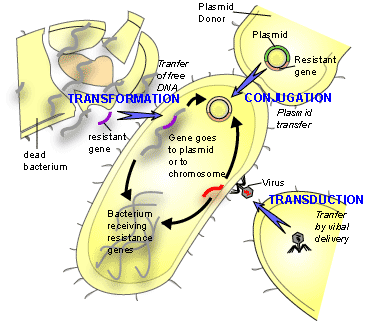
Various attempts have been made, of course, since the first discovery of phages in 1915 by the wonderfully python-esquely named Frederick Twort. (to give all and full credit they were also discovered completely independently in 1917 by Felix d'Herelle). The first system was based on morphology, what the phage looked like, and was greatly helped by the electron microscope. Although most phages adopt the 'lunar landing module' look, there is plenty of variation within that. Length of tail fibres, size of capsid, symmetry of the capsule, alright, not very much variation, but still something for taxonomists to hang onto.

Size and shape are never good indications of relatedness, a dolphin is more related to a hyena than to a shark, however similar the two might look. Nucleic acid research during the 1960's shook up the whole discipline of taxonomy by providing lots of new exciting DNA information. Phages could now be classified by the amount and type of DNA, which, added to the morphological data, provided a system (albeit a slightly wobbly one).
One of the most currently most widely popular methods to classify things is to examine the genetic DNA that codes for the ribosomes. Ribosomes are complexes of RNA and protein that are used to turn the genetic code into proteins. They are very highly conserved and are therefore very useful in determining evolutionary relatedness and taxonomy.
The problem is, of course, that bacteriophages don't have any ribosomes. They use the bacterial ones; they harness the bacterial internal machinery for replicating DNA and making proteins and therefore don't need to carry any of their own. In view of this, one of the most recent attempts to organise phage taxonomy has focused on looking at their proteins. The relatedness of the proteins has been used to create clever sounding things like distance matrices and the highly impressively named 'phage proteome tree'. Of course there are several problems, possibly the main one being that phages, especially the ones that sit inside bacteria, have a distressing tendency to pick up bits of DNA that aren't theirs. Which translates into proteins that aren't theirs and makes the whole procedure just that little bit more awkward.
There's been some work comparing the genomes of just the structural components, in the hope that there won't be too much genetic exchange going on with the genes that are actually needed to build the phage. The people doing it seem fairly confident, and have managed to isolate about five separate genera. There's a paper from them here, hopefully should be accessible (in form if not in content).
The whole thing is really all a bit up in the air, with some fairly amusing piss-ups between the different schools of thought. Horizontal gene transfer can be a bitch sometimes :)
What to do with DNA
Now we've actually managed to extract our DNA (like this) we get to cut it all up into tiny pieces. It might seem a bit pointless, but this is how to determine that we actually have the right bits of DNA in our extracts. Cutting DNA with little enzymes called restriction enzymes produces different restriction patters depending on what DNA you have.
Restriction enzymes are naturally produced by most bacteria, and what they do is cut pieces of DNA at very specific points. EcoRI, for example, cuts DNA after the G in the DNA sequence GAATTC. As each viral genome has a different DNA sequence, each one will produce a different restriction map, producing a characteristic number of bands on a gel:
 (this picture is not from my research, it is from here)
Each band is a blob of a certain size of DNA lit up with ethidium bromide (which is a dye, nothing very exotic). Different restriction enzymes, and different genomes, will produce different band patterns on the gel.
So, what do the bacteria need to produce DNA cutting enzymes for? The answer (naturally) is bacteriophages! One way the bacteria can protect themselves against viral invasion is to have lots of these enzymes around. As soon as the viruses inject their DNA into the bacteria cell, the restriction enzymes chop it all up.
But bacteria also contain DNA, and unlike people (and other eukaryotes), they don't keep it all tucked up in a nuclear membrane. So how do they stop the restriction enzymes from cutting up their DNA? One of the most common ways is to methylate the DNA, essentially sticking a methyl group (a carbon atom attached to three hydrogen atoms) onto some of the bases. in the example shown above, therefore, the restriction enzyme is looking for the sequence GAATTC. It sees this in invading DNA and slices it up, but in the bacterias own DNA it sees GA(methylated)A(methylated)TTC, which it doesn't recognise. And therefore, does not cut.
Restriction enzymes were first discovered my Daniel Nathans, Werner Arber, and Hamilton Smith. They won the Nobel Prize for it in 1978. (see here)
Restriction enzymes are naturally produced by most bacteria, and what they do is cut pieces of DNA at very specific points. EcoRI, for example, cuts DNA after the G in the DNA sequence GAATTC. As each viral genome has a different DNA sequence, each one will produce a different restriction map, producing a characteristic number of bands on a gel:
 (this picture is not from my research, it is from here)
Each band is a blob of a certain size of DNA lit up with ethidium bromide (which is a dye, nothing very exotic). Different restriction enzymes, and different genomes, will produce different band patterns on the gel.
So, what do the bacteria need to produce DNA cutting enzymes for? The answer (naturally) is bacteriophages! One way the bacteria can protect themselves against viral invasion is to have lots of these enzymes around. As soon as the viruses inject their DNA into the bacteria cell, the restriction enzymes chop it all up.
But bacteria also contain DNA, and unlike people (and other eukaryotes), they don't keep it all tucked up in a nuclear membrane. So how do they stop the restriction enzymes from cutting up their DNA? One of the most common ways is to methylate the DNA, essentially sticking a methyl group (a carbon atom attached to three hydrogen atoms) onto some of the bases. in the example shown above, therefore, the restriction enzyme is looking for the sequence GAATTC. It sees this in invading DNA and slices it up, but in the bacterias own DNA it sees GA(methylated)A(methylated)TTC, which it doesn't recognise. And therefore, does not cut.

Restriction enzymes were first discovered my Daniel Nathans, Werner Arber, and Hamilton Smith. They won the Nobel Prize for it in 1978. (see here)
Writing in officialese
One of the things about science nowadays is that it tends to generate impressive amounts of paperwork, which you have to wade through to get to the actual science. For example, I want to keep working as a Lab Rat to help out my supervisor. The money is available to fund me, but I can't actually get at it without filling out a little form explaining why.
It isn't too bad, two sides of A4 with mostly just information about who I am and what my details are. There's only one part where I have to do any actual writing, so I'm currently trying to figure out how to say "I want to work in a lab! It is fun! It will give me CV points!" in officialese. I have a feeling that writing "I want something on my CV. Duh, why do you think I want to work in September?" would probably be frowned upon. As would seeming excessively keen. I don't know though, is it acceptable to write that you actually enjoy lab work on a form? Or will they just think I'm making it up.
It's all good practise though. Sticking with lab work means that my future will be full of funding forms and various other bits of paperwork in whch I try to find convincing and acceptible reasons for doing what I do. And then trying to couch them in slightly better terms than "I want money. I like lab work. Give me money, I will give you work."
heh. It's like applying to university all over again. ("As well as achieving impressive exam results I have had lots of experience doing all sorts of intelligent things-FOR THE LOVE OF ALL THINGS HOLY JUST SOMEONE LET ME IN")
It isn't too bad, two sides of A4 with mostly just information about who I am and what my details are. There's only one part where I have to do any actual writing, so I'm currently trying to figure out how to say "I want to work in a lab! It is fun! It will give me CV points!" in officialese. I have a feeling that writing "I want something on my CV. Duh, why do you think I want to work in September?" would probably be frowned upon. As would seeming excessively keen. I don't know though, is it acceptable to write that you actually enjoy lab work on a form? Or will they just think I'm making it up.
It's all good practise though. Sticking with lab work means that my future will be full of funding forms and various other bits of paperwork in whch I try to find convincing and acceptible reasons for doing what I do. And then trying to couch them in slightly better terms than "I want money. I like lab work. Give me money, I will give you work."
heh. It's like applying to university all over again. ("As well as achieving impressive exam results I have had lots of experience doing all sorts of intelligent things-FOR THE LOVE OF ALL THINGS HOLY JUST SOMEONE LET ME IN")
sometimes life gets you like that
This was going to be quite a long soul-searching post about the general usefulness of science, based on a conversation held the other evening about whether the Large Hadron Collider was actually worth it. Huge amounts of time, money and energy (and a slight amount of danger) all for ... what? The Higgs partical? Why? Seriously, is there any point to finding this thing except just ... because?
But I am tired, and vaguely upset, and really not in the mood to spend a goodly amount of time talking about how the subject I ended up doing (and will keep on doing) is a mighty large pile of intellectual w*nk. It is starting to look very definitely like science is going to constitute a large part of my life, and I need to be a lot more awake and cheerful before pulling my life apart like that.
So I'm going to read firefly fanfiction instead.
Literature degree? Should'a could'a would'a.
But I am tired, and vaguely upset, and really not in the mood to spend a goodly amount of time talking about how the subject I ended up doing (and will keep on doing) is a mighty large pile of intellectual w*nk. It is starting to look very definitely like science is going to constitute a large part of my life, and I need to be a lot more awake and cheerful before pulling my life apart like that.
So I'm going to read firefly fanfiction instead.
Literature degree? Should'a could'a would'a.
Not quite the end of the world...
The Large Hadron Collider has just been turned on! I should probably be slightly more excited by this, but I am slightly upset today due to the devistating discovery that our mutant DNA isn't. We have lots of lovely wild-type DNA and no mutant strains at all. *sigh*
But anyway, the Hadron Collider. As yet, no black holes have opened, and no aleins or stragelets have appeared. Not particularly surprising though, as as far as I can understand, switching it on was never the issue, the problem was with the actual collisions. Which haven't started yet. So far, they've just been shooting protons around the circit, in a clockwise direction. Later, they're going to start sending them anticlockwise as well. The actual high-energy collisions aren't due to start until the 21st October.
For the record, I'm fairly sure nothing particularly bad will happen when they do start the collisions. Hopefully they'll find something interesting, they may even find something useful. And if it all does go horrendously wrong, it is a slightly comforting thought that we won't actually know about it.
(Although if it creates a black hole that sucks the whole universe up my tentative plans for reincarnation might end up severly scuppered).
But anyway, the Hadron Collider. As yet, no black holes have opened, and no aleins or stragelets have appeared. Not particularly surprising though, as as far as I can understand, switching it on was never the issue, the problem was with the actual collisions. Which haven't started yet. So far, they've just been shooting protons around the circit, in a clockwise direction. Later, they're going to start sending them anticlockwise as well. The actual high-energy collisions aren't due to start until the 21st October.
For the record, I'm fairly sure nothing particularly bad will happen when they do start the collisions. Hopefully they'll find something interesting, they may even find something useful. And if it all does go horrendously wrong, it is a slightly comforting thought that we won't actually know about it.
(Although if it creates a black hole that sucks the whole universe up my tentative plans for reincarnation might end up severly scuppered).
Reflective Learning
The end of my project is coming up unfortunately (although I still get to stay in the lab so wo0t, not too bad) and one of the things I should probably do for my portfolio is a short 'reflective learning' sheet. i.e, What I Have Gained From This Experience.
The short answer is: A lot. I have enjoyed (almost) every minute of lab work, it's been frustrating at times, sure, but it's basically just been one hell of an awesome ride. The thing is, in my official 'reflective learning' thing I should probably focus on things of Practical Value. Various techniques and things I have picked up, information I have learned about working in a lab environment, an increased awareness of the workings of science etc.
In reality, of course, the things I've actually picked up are far vaguer and more interesting. So here is the unofficial version of what I've really got out of the whole experience. They don't tick any boxes in forms, but they are somehow a lot more important:
And hopefully that attitude will stay with me throughout next term, and encourage me to actually work hard :)
The short answer is: A lot. I have enjoyed (almost) every minute of lab work, it's been frustrating at times, sure, but it's basically just been one hell of an awesome ride. The thing is, in my official 'reflective learning' thing I should probably focus on things of Practical Value. Various techniques and things I have picked up, information I have learned about working in a lab environment, an increased awareness of the workings of science etc.
In reality, of course, the things I've actually picked up are far vaguer and more interesting. So here is the unofficial version of what I've really got out of the whole experience. They don't tick any boxes in forms, but they are somehow a lot more important:
- Reflexes. I've gained a whole lot more reflexes and instinctive responses, to a vaguely Pavlovian turn of the head when an alarm goes off to a vital spacial awareness of where the end of a pipette tip is.
- What happens in a lab. Mostly washing up and cookery. The science comes in at the beginning when you write a protocol and at the end when you stare in confusion at your results. The bit in the middle is mostly cookery.
- Organisation. Oh ghod. Probably the best thing I've got from this is the beginnings of development of a healthy paranoia about labelling things. Label and date everything, even with the useless information.
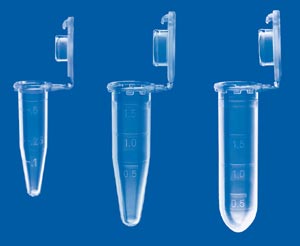
- Small writing. I am getting very good at writing tiny labels on miniature eppindorfs.
- Pragmatism. Sometimes experiments work. Sometimes they don't. Life is not predictable. The lab may be scientific, but the organisms damn well aren't. That's how it is. Squint at the protocol, get new equipment, shrug, and do the whole thing all over. (and if it works, you cna spin round on your chair making sqeaky noises)
- Temporal awareness. Everything takes longer than you think. Everything.
- Orders of magnitude. Never underestimate the ability of an order of magnitude to suddenly vanish. There is a big difference between 10 and 100, which has a tendency to disappear at crucial times.
And hopefully that attitude will stay with me throughout next term, and encourage me to actually work hard :)
Patron Saints
So during a particularly long session, with fairly crucial results, I did a bit of a google to see if there was anyone that the Catholic church, in its infinate wisdom, had put aside to recieve the various prayers and obscinities coming from those persuing the noble discipline of science. It turns out (interestingly enough) that there is:

The rather imposing man pictured above is Saint Albert the Great (1206-1280). The official Patron Saint of science. Also known as (according to saints.SPQN.com) Albertus Magnus, Doctor Expertus and Doctor Universalis. My hazy grasp of Latin seems to suggest the last one may be a tad over the top for philosophy teacher who liked browsing science books but there you go. To my amazement, there is also a little prayer to say to him:

Thomas Aquinus, patron saint of students and academics. A quick bit of googling also confirms that he is the patron saint against storms, against lightning, of apologists, of chastity and (for reasons best known to himself) of pencil-makers. He has a lot more alternative names as well: Angelic Doctor, Doctor Angelicus (the same thing but in Latin, surely?), Doctor Communis, Great Synthesizer (there should be something funny to say about this one, can't think of it though), The Universal Teacher and, rather bizarrely, The Dumb Ox.
I love the catholic Saints. They are like the old polytheistic gods (except a lot less interesting) and there seems to be one for almost anything you care to think of.

The rather imposing man pictured above is Saint Albert the Great (1206-1280). The official Patron Saint of science. Also known as (according to saints.SPQN.com) Albertus Magnus, Doctor Expertus and Doctor Universalis. My hazy grasp of Latin seems to suggest the last one may be a tad over the top for philosophy teacher who liked browsing science books but there you go. To my amazement, there is also a little prayer to say to him:
Dear Scientist and Doctor of the Church, natural science always led you to the higher science of God. Though you had an encyclopedic knowledge, it never made you proud, for you regarded it as a gift of God. Inspire scientists to use their gifts well in studying the wonders of creation, thus bettering the lot of the human race and rendering greater glory to God. Amen
For someone known as the 'Doctor Universalis' I'm not entirely sure if the 'never made you proud' bit scans wonderfully well. Also the prayer is not as specific as could be hoped. Albert the Great make this bloody gel work feels slightly more appropriate. And while my phages may hopefully one day end up bettering the human race (heh) I'm not entirely sure how they bring glory to god (would phages be able to pray, if taught? Could they destroy bacteria in a particularly holy way?). I am quite surprised though, that he turned up, I wasn't expecting there to be anyone specific for science, if anything I was expecting this guy:

Thomas Aquinus, patron saint of students and academics. A quick bit of googling also confirms that he is the patron saint against storms, against lightning, of apologists, of chastity and (for reasons best known to himself) of pencil-makers. He has a lot more alternative names as well: Angelic Doctor, Doctor Angelicus (the same thing but in Latin, surely?), Doctor Communis, Great Synthesizer (there should be something funny to say about this one, can't think of it though), The Universal Teacher and, rather bizarrely, The Dumb Ox.
I love the catholic Saints. They are like the old polytheistic gods (except a lot less interesting) and there seems to be one for almost anything you care to think of.
Subscribe to:
Posts (Atom)