Field of Science

Showing posts with label reports. Show all posts

Antibiotics and Synthetic Biology

ResearchBlogging.org
The model for bacterial death by antibiotics was fairly simply until recently. Antibiotics work by targeting a certain area of the bacteria; beta-lactams target the cell wall, Rifamycins target RNA synthesis, tetracyclins inhibit protein synthesis etc. The theory was that by inhibiting these processes, a certain vital function within the bacteria would be stopped, leading to its death.

However due to research done by Kohanski (references below) the story is looking a bit more complicated. Looking at three different classes of antibiotics they found that no matter what the site of action, all the antibiotics induced hydroxyl radicals. This was in bactericidal drugs, which actually kill bacteria, rather than bacteristatic ones (which just prevent cell growth). They also demonstrated that this mechanism of hydroxyl radical production was the end product of a chain of reactions involving damage to the TCA cycle (aka the Krebs cycle - which is a major part of respiration) which lead to damage to iron-sulphur clusters and subsequent production of the DNA-damaging hydroxyl radicals. This is shown diagramatically below, and this first paper was covered by Jim at Mental Indigestion with some great follow-up comments and discussion.


They've recently put out a review (second reference below) of which I find the most exciting parts are the two little extra-information boxes. One of them covers drug synergy and the second covers synthetic biology, both of which I'm getting increasingly more interested in.

Drug synergy

One of the most useful things about modelling drug actions is it can help to show which drugs would work most effectively in pairs. Using two drugs together can have many potential effects; it can make the treatment more effective, sometimes is can make the treatment less effective and of course some can be dangerous for the patient. Work on drug synergy showed that aminoglycoside antibiotics (which affect RNA synthesis) become more affective when given simultaneously with B-lactam antibiotics (which lead to cell wall breakdown) as the increased cell wall breakdown helps the aminoglycosides to get inside the cell. Conversely, drugs that inhibit protein synthesis are less effective when given at the same time as drugs which inhibit DNA synthesis as making it harder to synthesise proteins from sub-optimal DNA actually makes the cell more able to survive.

These interactions will affect the dosage of drugs used during synergistic treatments, and it is hoped that using two different types of antibiotics at low doses might be more healthy for the patient, and might help to combat against antibacterial resistance to one of the drugs.

Synthetic Biology

Another interesting concept the paper brings attention too is the potential use of synthetic biology to aid in both the study and application of antibiotic-related death systems. By using synthetic genes to disrupt or alter the proposed antibiotic network novel drug targets could be discovered. If turned into a high-throughput system this would be far more useful than the current screening system which tests for a potential drugs interaction with a target, rather than the ability of this interaction to lead to cell death.

Synthetic genes can be delivered into the bacterial cell via bacteriophages. Adding a synthetic gene into a bacteriophage for bacteria cell delivery has been attempted successfully before when they were used to enhance E. coli cell death by delivering genes for proteins that disrupted the DNA-repair system within the bacteria. This allowed faster and more effective killing of the bacteria at lower doses of antibiotic.

At a time when bacteria are fast becoming resistant to even the front line drugs, research that suggests novel ways of killing bacteria can produce some very useful outcomes. Using combinations of drugs at lower concentrations, or aiding antibiotics by introducing them along with synthetic genes in bacteriophages allows an increased shelf-life of the drugs that we currently possess as well as providing potential systems to aid the discovery of new antibiotics.


---

Kohanski MA, Dwyer DJ, Hayete B, Lawrence CA, & Collins JJ (2007). A common mechanism of cellular death induced by bactericidal antibiotics. Cell, 130 (5), 797-810 PMID: 17803904

Kohanski MA, Dwyer DJ, & Collins JJ (2010). How antibiotics kill bacteria: from targets to networks. Nature reviews. Microbiology, 8 (6), 423-35 PMID: 20440275

---

Follow me on Twitter!

Scanner Woes

How many times have I heard it on deviantart.com? The continual cry of "Oh noes! The scanner ate my picture!" And now I'm making the same complaints about mine.

Actually, my plate pictures haven't been too bad. Although a couple of them are somewhat ... darker and fuzzier than they could be. As there are no labels for anyone to pinch my results with, I think I am justified on posting a few on here:

That one's alright. A bit dark though. At least the contrast can be seen. In case anyone was wondering, what you are seeing is bacteria streaked across the plate and left to grow (marked by the black line across the plate) and the another bacteria grown on top of it, which has subsequently been killed.

But as this may turn into a paper (oh please! *crosses fingers and hopes*) I can't be any more specific.


This one (on the right) hasn't really come out at all. meh. There's not much I can do except tell people what they should be seeing and hope it all works out alright. So what you should be seeing is a patch of dead overlay (the light bit) that follows the line of the mould (crosshatched black pen), but is not actually present under most of the mould.


I have a dissertation to write up based on these! *panic*

On the plus side, my scanner seems to have also created some results of its own. Take a look at this bioassay:

See the white lines around the circles on the first two rows? They were not at all obvious in the photo. Although when I squint at the photo now I can kind of see them.

Yes, that is my handwriting at the bottom of the photo. Which was taken by yours truly in the (very old) lightbox, narrowly avoiding getting an accidental blast of UV light as well (UV light is used to take pictures of gels, and nobody bothers to switch the switch back to 'white light' when they've finished; noticed just in time)

I am very proud of all my results :) Which has probably confirmed for a Certain Special Someone that they are indeed going out with a very nerdy little thing.

=D

Presenting Histones

Bravery is an interesting word. It's one of those words that has many different subtle shades of definition; ranging from altruism to stupidity. The big question is, of course, was it brave or stupid of me to volunteer to do a presentation at the first supervision of term?

To put this more in context, I haven't actually done a scientific presentation since, well, at all. We did some mini ones in our supervision group last year, but they did not go so well. I haven't had to speak in front of a large crowd of people for about three years, not since the upper sixth performance of 'Dracula' where I stumbled on stage for a few minutes to play Translyvanian Peasant With Godawful Accent.

Here is the title and the link (for those who can get it) for what I have to present:
"Rb targets histone H3 methylation and HP1 to promoters"

I'm going to go through the paper now and try to provide a quick summary of what it is about. I have no idea how I'm meant to present it (hopefully there will be a brief meeting at some point to discuss this) but I can't help but feel things will go slightly better if I actually know what the paper is talking about.

okay... a look at the abstract and one brief scribbled diagram later this is what I've got:

Pretty pictures if you follow the links!

There is lots of DNA in the cell, so in order for it to fit into the nucleus it has to be coiled. One method for coiling involves wrapping the DNA around histone proteins (beads on a string) to keep them coiled. As well as keeping the DNA wound up, histones can also signal to transcription factors (proteins that start the complex process of turning DNA into protein) which bits of the DNA they need to read by displaying chemical signals.

One such signal is the methyl group, -CH3. Sticking a methyl group onto the end of a histone signals to the cells that this DNA is in Do Not Disturb mode, and should not be turned into protein. The study the paper was doing focused on a protein that goes around putting up all the nuclear Do Not Disturb signs; SUV39H1 (which shall henceforth be known as SUVy). This methylated the histones at a certain point (lysine 9 of histone H3 for anyone interested) and keeps the DNA associated with them from being expressed. It does this by recruting HP1 which binds to the DNA and, as far as I can work out from this, just sits there and stops it being expressed.

There are two forms that DNA in the nucleus can take: heterochromatin, which is all coiled up and not doing anything, and enchromatin, which is being actively expressed. This paper was getting fairly excited because while it was known that SUVy and HP1 were good at keeping heterochromatin quiet, they found them interacting with euchromatin! What's more they were consorting with Rb, a very well known protein that is involved in all sorts of processes that supress the expression of DNA, particularly in different parts of the cell cycle.

By doing various assays involving pulling out the Rb bound to DNA and then finding what bit of DNA it was bound to, they discovered that it methylated the same H3 on the lycine that HP1 did. Furthermore, Rb can interact with SUVy, due to a 'pocket domain' which SUVy fits into quite well. The end conclusion of all this is that Rb and SUVy interact together, methylate a part of the DNA which people hadn't really known SUVy was methylating, and then HP1 comes and sits on it.

The exciting thing here (alright not that exciting, but fairly interesting at the least) is that they put forward at the end that there may be other euchromatin repressor proteins out there that bind to SUVy and mobilise the DNA repression in euchromatin. Also, as Rb is involved in cell cycle control, it helps to build a bigger picture of just what is going on in the cell cycle (which cancer reseachers tend to like).

And woohoo I get to do a presentation on it. :)

Writing in officialese

One of the things about science nowadays is that it tends to generate impressive amounts of paperwork, which you have to wade through to get to the actual science. For example, I want to keep working as a Lab Rat to help out my supervisor. The money is available to fund me, but I can't actually get at it without filling out a little form explaining why.

It isn't too bad, two sides of A4 with mostly just information about who I am and what my details are. There's only one part where I have to do any actual writing, so I'm currently trying to figure out how to say "I want to work in a lab! It is fun! It will give me CV points!" in officialese. I have a feeling that writing "I want something on my CV. Duh, why do you think I want to work in September?" would probably be frowned upon. As would seeming excessively keen. I don't know though, is it acceptable to write that you actually enjoy lab work on a form? Or will they just think I'm making it up.

It's all good practise though. Sticking with lab work means that my future will be full of funding forms and various other bits of paperwork in whch I try to find convincing and acceptible reasons for doing what I do. And then trying to couch them in slightly better terms than "I want money. I like lab work. Give me money, I will give you work."

heh. It's like applying to university all over again. ("As well as achieving impressive exam results I have had lots of experience doing all sorts of intelligent things-FOR THE LOVE OF ALL THINGS HOLY JUST SOMEONE LET ME IN")

Reflective Learning

The end of my project is coming up unfortunately (although I still get to stay in the lab so wo0t, not too bad) and one of the things I should probably do for my portfolio is a short 'reflective learning' sheet. i.e, What I Have Gained From This Experience.

The short answer is: A lot. I have enjoyed (almost) every minute of lab work, it's been frustrating at times, sure, but it's basically just been one hell of an awesome ride. The thing is, in my official 'reflective learning' thing I should probably focus on things of Practical Value. Various techniques and things I have picked up, information I have learned about working in a lab environment, an increased awareness of the workings of science etc.

In reality, of course, the things I've actually picked up are far vaguer and more interesting. So here is the unofficial version of what I've really got out of the whole experience. They don't tick any boxes in forms, but they are somehow a lot more important:
  • Reflexes. I've gained a whole lot more reflexes and instinctive responses, to a vaguely Pavlovian turn of the head when an alarm goes off to a vital spacial awareness of where the end of a pipette tip is.
  • What happens in a lab. Mostly washing up and cookery. The science comes in at the beginning when you write a protocol and at the end when you stare in confusion at your results. The bit in the middle is mostly cookery.
  • Organisation. Oh ghod. Probably the best thing I've got from this is the beginnings of development of a healthy paranoia about labelling things. Label and date everything, even with the useless information.
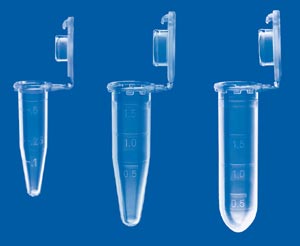
  • Small writing. I am getting very good at writing tiny labels on miniature eppindorfs.
  • Pragmatism. Sometimes experiments work. Sometimes they don't. Life is not predictable. The lab may be scientific, but the organisms damn well aren't. That's how it is. Squint at the protocol, get new equipment, shrug, and do the whole thing all over. (and if it works, you cna spin round on your chair making sqeaky noises)
  • Temporal awareness. Everything takes longer than you think. Everything.
  • Orders of magnitude. Never underestimate the ability of an order of magnitude to suddenly vanish. There is a big difference between 10 and 100, which has a tendency to disappear at crucial times.
The big thing though, the thing I've gained the most and that I won't dare write down on a reflective learning sheet in case future employers read it and snigger at me for being embarrassingly eager is that basically this project has showed me what I want my life to be like. I want to do this. I want to be in this mad, bad, crazy world of desperate funding and scrabbling for results and justifying everything. I want to live here, to gain even more paranoia about accuracy and double-checking, and to struggle through with my hideous maths skills and vaguely optimistic results reading. I was always kind of headed for lab work and practical science, it's just that suddenly I know why.

And hopefully that attitude will stay with me throughout next term, and encourage me to actually work hard :)

Things I've learnt today...

If you're writing a report, don't write the discussion in five minutes straight. And don't print immediately after writing the discussion. And don't hand the report in without checking you've written everything you want to write.

uuurgh...

I had lots of interesting things to put in that discussion as well. It was going to be a good discussion.

Other things I've learnt:
  • Don't waste time looking at random sites when you should be writing reports
  • Don't do this so often that you end up writing the report the morning it's due
  • Don't miss breakfast to write a report
  • The pope is a catholic
  • Bears really do shit in the woods.
Gak. I am the worst scientist ever.
:(

Good news though: We have phage! They grew, with no contamination, which means that tommorrow we get to slice them open and take their DNA out. YAY!!